When One Link Snaps: Stress-Testing Your Refill Chain Before It Breaks
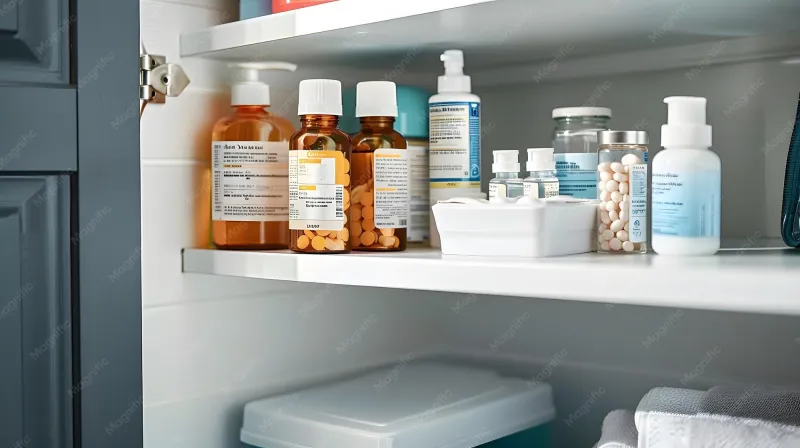
Photo: organized home medicine cabinet with prescription bottles, via img.freepik.com
Ask around and you'll hear the same story with different details. The insurance switched and nobody told the pharmacy. The doctor's office sat on a renewal request for a week. The pharmacy ran out of stock the day you showed up. Any one of these is a minor annoyance — unless the medication in question is something you can't safely skip, like a blood pressure regulator, an antidepressant you've been stable on for years, or insulin.
That's the thing about a refill chain: it only has to fail once to matter. And most of us are running ours with zero redundancy built in.
Map Your Chain Before It Snaps
Grab a piece of paper (or a notes app) and trace every step between you and a full bottle. For a typical maintenance medication, that chain looks something like this:
- Prescriber — writes the renewal
- Insurance — approves coverage, sets quantity limits
- Pharmacy — stocks the drug, processes the claim
- Delivery or pickup — gets it into your hands
Now ask the uncomfortable question for each link: what happens if this one fails? If your doctor's office closes early on Fridays and your refill request lands Friday afternoon, that's a built-in three-day delay. If your pharmacy is the only one within 20 miles that stocks your dose, that's a single point of failure. If your plan's mail-order partner takes 10 business days to ship, a surprise denial can strand you for two weeks.
Write down the failure mode for each link. You can't fix what you haven't named.
The 90-Day Advantage
The single highest-impact move most people can make is switching from 30-day to 90-day supplies, either through their plan's mail-order program or a retail pharmacy that fills extended supplies. Here's why it matters beyond the copay savings:
- Fewer renewal events. A 90-day fill means your prescriber only has to renew four times a year instead of twelve. Four chances for a delay instead of twelve.
- A natural buffer. If you refill on day 85 instead of day 88, you quietly bank a small cushion without hoarding.
- Less exposure to short-term chaos. Storms, travel, illness, pharmacy system outages — a longer supply shrugs off all of it.
One caveat: some controlled substances are legally limited to shorter supplies, and not every plan covers extended fills for every drug. Ask your pharmacist what applies to your specific medications.
Sync Everything (Then Stop Thinking About It)
If you take three medications filled on three different cycles, you're running three separate refill chains — and tripling your odds of a failure. Most pharmacies offer medication synchronization ("med sync"), which aligns everything to a single pickup or delivery date each month.
The practical benefit is subtle but real: one date to remember, one phone call if something's wrong, and one predictable window to catch problems before they become gaps. If your pharmacist notices a renewal is stuck with the prescriber's office, there's still time to chase it — because you're finding out two weeks out, not two hours.
Build a Second Door
Redundancy means having more than one way to get the same bottle. A few options worth setting up before you need them:
- A backup pharmacy in your insurance network. Transfer eligibility rules vary, but knowing which chain or independent pharmacy can take your prescription on short notice turns a crisis into an errand.
- A mail-order or 24/7 online pharmacy option. Round-the-clock ordering won't speed up a prescriber, but it removes the pharmacy's business hours from your list of failure points — and for people working nights or living in rural areas, that matters a lot.
- A prescriber's standing renewal plan. Ask directly: how will refills be handled between visits? Some offices auto-send renewals on a schedule; others wait for you to request. Knowing which one you're dealing with changes everything.
Know Your Emergency Supply Rules
Here's the part almost nobody knows: many states require or permit pharmacies to dispense an emergency supply of certain non-controlled maintenance medications — often up to a 72-hour dose — if your refill can't be processed right away and going without would harm you.
The rules vary by state in the details (which drugs qualify, whether the pharmacist can override a prior authorization, how it's billed), but the concept is broadly consistent: if your chain breaks, a pharmacist may have legal authority to bridge you. The catch? It's discretionary and it's not automatic. You have to ask, and the pharmacist has to judge that it's appropriate.
Call your pharmacy this week and ask two questions: Do you dispense emergency supplies under [your state]'s rules? What would I need to show? Ten minutes now beats a panicked counter conversation later.
Run the Drill
A plan you've never tested isn't a plan — it's a hope. Once a year, do a quick audit:
- Check every prescription label for remaining refills. Zero refills means a renewal is already overdue in spirit.
- Confirm your prescriber's office has current pharmacy and contact info on file.
- Verify your backup pharmacy is still in-network and still stocks your medications.
- Look at your insurance's formulary for any mid-year changes to your drugs.
Fifteen minutes, once a year. That's the whole cost of never finding out the hard way that your refill chain had a weak link all along.
The medicine cabinet that never goes empty isn't luck. It's a map, a buffer, a second door, and a phone call you made in advance. Build it while everything's working — because that's the only time you can.