When the Forecast Becomes Part of Your Prescription: Seasonal Survival for Mail-Order Meds
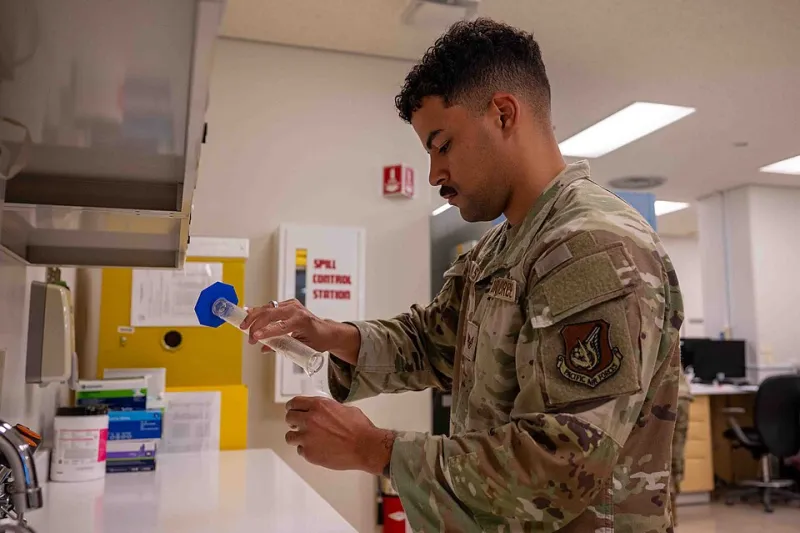
Photo: U.S. Air Force photo by Airman 1st Class Karina Lopez, Public domain, via Wikimedia Commons
Most people check the weather to decide between sneakers and boots. Your pharmacist checks it to decide whether your insulin just spent four hours in a 100-degree delivery truck.
It sounds dramatic, but it's not. Weather is one of the most underrated variables in American prescription care, and the rise of mail-order pharmacies — especially the always-open, order-at-2-a.m. kind we know well — has put your medications in direct contact with the elements more often than ever before. Here's what's really going on, and how to stay ahead of it.
Why Temperature Matters More Than the Label Suggests
Every medication has a storage range, and for most pills it's a comfortable 68 to 77 degrees Fahrenheit, with some wiggle room for short excursions. That's easy to maintain in a pharmacy. It's much harder in a cardboard box riding in a truck through Phoenix in July or waiting on a porch in Minneapolis in January.
Heat accelerates chemical degradation. In plain English: medication can lose potency before its expiration date. Cold does something different — it can freeze liquids, crack suspension formulas, and in the case of biologics like insulin, permanently damage the protein structure. Once insulin freezes, it doesn't recover when it thaws. It's done.
Humidity plays its own quiet role. Moisture seeps into pill bottles, causing tablets to soften, discolor, or break down faster. That's why your pharmacist winces when you store medication in the bathroom, the one room in the house that's basically a humidity chamber.
The Cold Chain Problem Nobody Talks About
If you've ever ordered insulin, certain biologics, GLP-1 injectables, or even some eye drops, your package traveled a "cold chain" — an unbroken sequence of refrigerated storage from manufacturer to your door. Every link in that chain matters.
In summer, the weak link is usually the last mile. A refrigerated warehouse can hand a package to a courier at 8 a.m., but if it sits on your porch until 6 p.m. during a heat wave, the ice packs inside are fighting a losing battle. In winter, the same package can freeze solid on a doorstep overnight.
Reputable mail-order pharmacies plan around this. They add extra insulation in summer, use phase-change packs instead of basic ice, and monitor regional forecasts when scheduling shipments. Some will simply hold a heat-sensitive shipment and call you. If your pharmacy has never mentioned weather to you, that's worth a question.
Your Summer Storage Checklist
Run through this when temperatures climb:
- Track your shipments. Don't let weather-sensitive meds sit outside. Sign up for delivery alerts and bring packages in immediately.
- Never leave meds in the car. A parked car can hit 120°F in under an hour. This includes your gym bag and glove compartment.
- Skip the bathroom cabinet. Store medications in a cool, dry place — a bedroom shelf or kitchen cabinet away from the stove beats the shower steam.
- Check your insulin. In-use pens can live at room temperature for a limited time (usually about 28 days for many brands), but unopened ones belong in the fridge, not the freezer.
- Ask about cold-pack upgrades. If you order refrigerated meds in July, request expedited or insulated shipping. Many pharmacies offer it free for heat-sensitive items — you just have to ask.
Your Winter Storage Checklist
Cold snaps bring their own rules:
- Bring packages indoors fast. Freezing temperatures can damage liquids, inhalers, and injectables just as thoroughly as heat.
- Keep meds away from radiators and heating vents. The spot next to the heater that feels great to you is a degradation zone for your pills.
- Watch for frozen deliveries. If a liquid medication arrives frozen or looks slushy, call the pharmacy before using it. Don't just thaw and assume it's fine.
- Refill before the storm. If a blizzard is forecast, don't wait until you're down to two tablets. Get ahead of it — this is exactly why round-the-clock ordering exists.
- Travel smart. Keep medications in your carry-on, not checked luggage, where they'll face unregulated cargo-hold temperatures.
What Your Pharmacist Is Actually Doing Behind the Scenes
Here's the part most patients never see. When a heat dome parks itself over Texas or a bomb cyclone heads for the Northeast, pharmacy operations teams are watching weather maps the way airlines watch storms. They're adjusting shipping zones, adding insulation, delaying heat-sensitive orders, and calling patients to reschedule deliveries.
That pause on your order during a heat wave isn't a delay in service — it's a decision made to protect the medication. If you ever get a heads-up email about weather-related shipping changes, that's a good sign. It means someone on the other end is paying attention.
The Bottom Line
Your prescription was validated in a controlled environment. The moment it leaves that environment — through a mailbox, a dashboard, or a steamy bathroom — the clock starts ticking a little faster. You can't control the weather, but you can control where your meds live and when they arrive.
Order early, track everything, store wisely, and when in doubt, ask the pharmacist. They've been checking the forecast longer than you think — and honestly, they wish more patients did too.