Miles From the Counter: Life Inside America's Pharmacy Deserts
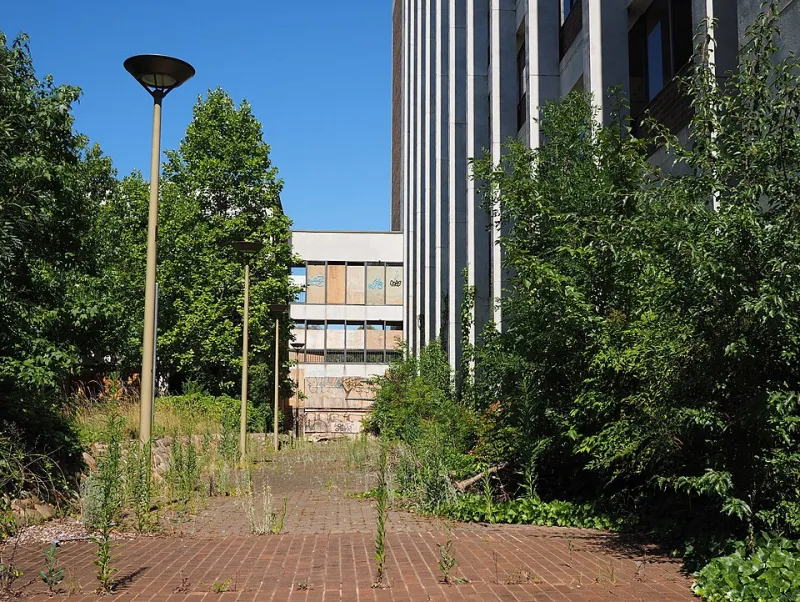
Photo: Nick-D, CC BY-SA 4.0, via Wikimedia Commons
There's a particular kind of quiet that settles over a small town when its last pharmacy closes. The building's still there — often the old brick one on Main Street with the awning and the neon cross that flickered for decades. But the sign comes down, the shelves get emptied, and suddenly the nearest place to fill a blood pressure prescription is a 40-minute drive in the opposite direction.
That's not a hypothetical. It's the reality in a growing number of American communities that researchers have come to call pharmacy deserts — areas where residents live a mile or more from the nearest pharmacy in urban settings, or ten or more miles in rural ones. And unlike food deserts, which get periodic national attention, pharmacy deserts have expanded with surprisingly little fanfare.
The Map Keeps Shrinking
The numbers tell a blunt story. Since the late 2000s, the US has lost thousands of retail pharmacy locations, with independent drugstores closing at the fastest clip. Major chains have announced hundreds of additional closures in recent years, concentrated in states like California, Texas, Florida, and New York — but the deepest impact lands in places that were already underserved.
Studies from the University of Illinois Chicago and the Rand Corporation have estimated that a meaningful share of urban neighborhoods — particularly predominantly Black and Hispanic communities — qualify as pharmacy deserts, along with vast stretches of rural America. Roughly 40 million Americans live in counties classified as rural, and for many of them, a "quick trip to the pharmacy" was never quick to begin with.
What makes this worse is who's most affected. The people most likely to live in a pharmacy desert are also the people most likely to need regular medication access: older adults, people managing diabetes or heart disease, and households without reliable transportation. When the corner drugstore disappears, the burden doesn't fall evenly. It falls on the neighbor who no longer drives at night, the single parent working two jobs, the retiree whose insulin refill now requires borrowing a car.
Why the Doors Keep Closing
There's no single villain here — it's more like a pile-up of pressures.
Reimbursement rates for filling prescriptions have been squeezed for years, meaning pharmacies make thinner margins on the very products that bring people through the door. Independent pharmacists face chain competition and soaring overhead. Chains, in turn, face their own financial pressures and have responded by pruning locations, often in lower-income neighborhoods where foot traffic and insurance mix make the math hardest.
Add in staffing shortages and the rise of retail clinics changing shopping patterns, and you get a slow-motion retreat. Nobody announces a pharmacy desert. It just happens, one "store closing" sign at a time.
What a Desert Actually Does to People
Here's the part that rarely makes headlines: when access gets harder, adherence drops. That's the clinical term for whether people actually take their medications as prescribed — and it's one of the strongest predictors of long-term health outcomes.
Research has repeatedly linked pharmacy closures to a decline in statin and blood pressure medication adherence in affected neighborhoods. People don't stop needing their meds when the store closes. They just start stretching refills, splitting doses, or skipping days until they can arrange a ride. For chronic conditions like hypertension or diabetes, those gaps quietly compound.
There's also the emergency factor. A pharmacy that's 45 minutes away isn't much help when your child spikes a fever at 9 p.m. and the pediatrician calls in an antibiotic. Distance turns routine problems into overnight ones.
Closing the Gap Without a Car Trip
So what can you actually do if the nearest pharmacy is a highway drive away? More than you might think.
Start with mail-order delivery. Most insurance plans — including Medicare Part D plans — offer mail-order pharmacy options, often with 90-day supplies at lower copays. If your plan doesn't, licensed online pharmacies that ship nationwide can fill legitimate prescriptions sent by your doctor. The key phrase is licensed: look for verification through the National Association of Boards of Pharmacy or the .pharmacy domain program before ordering anything online.
Use delivery through remaining local options. Even in areas that have lost standalone pharmacies, some hospital systems, grocery stores, and regional chains still deliver. A quick call to your doctor's office can turn up options you didn't know existed — they field this question constantly.
Consolidate your refills. If every trip costs you an hour, don't make three trips a month. Ask your prescriber to synchronize your medications so they refill on the same day. One trip, one delivery, one calendar reminder.
Build a backup before you need it. The worst time to figure out your medication pipeline is the night you run out. If your local options are thin, set up an online account now, upload your prescriptions, and get a routine refill delivered while you still have a buffer. That way the system is proven before it's critical.
Know the telehealth shortcut. Many states now allow prescribers to send prescriptions electronically to any licensed pharmacy in the state — which means a rural resident can have a prescription routed to a mail-order pharmacy without ever leaving home. If you're seeing a doctor via telehealth anyway, ask them to send your refill to a delivery service rather than the nearest town.
Access Is Infrastructure
It's tempting to think of pharmacies as just another retail business, but they've quietly become part of America's healthcare safety net — the place where people get flu shots, blood pressure checks, and answers to questions they were too rushed to ask at the doctor's office.
When those locations vanish, the gap doesn't fix itself. But it can be bridged. Between mail-order options, verified online pharmacies operating around the clock, and prescription delivery services, the distance between you and your medication is no longer strictly measured in miles. Your ZIP code still matters — but with a little setup, it doesn't have to make the final call.