Two States, One Medicine Cabinet: The Real Rules for Snowbird Prescriptions

Photo: retired couple packing suitcase Florida winter retirement, via img.freepik.com
Every October, a quiet migration happens. License plates from Minnesota, Michigan, and Wisconsin start popping up in grocery store parking lots from Sarasota to Scottsdale. The snowbirds have landed.
But while the suitcases get packed with tropical shirts and reading glasses, there's one thing that doesn't travel automatically: your prescriptions. And if you take a daily medication for blood pressure, diabetes, or cholesterol, discovering that gap in November can turn a sunny escape into a stressful scramble.
Here's what every seasonal traveler should know before heading south.
Yes, Your Prescription Is Valid in Another State
Let's clear up the biggest misconception first: a prescription written by your doctor back home is generally valid at any licensed pharmacy in the US. There's no federal law requiring you to see a local doctor just to refill a maintenance medication in your winter state.
The catch? The pharmacist on the other end. A Florida pharmacy can't see your Minnesota prescription history the way your hometown pharmacist can. They'll need your prescription information, your insurance details, and sometimes a quick verification with your prescriber's office — which, if your doctor's office is closed for the evening or buried in end-of-day phone calls, can slow things down.
Some states also have their own quirks around controlled substances. Medications for ADHD, certain pain conditions, and anxiety can face stricter scrutiny when you try to fill them far from home, and some prescribers won't write them for patients who spend half the year out of state. If you take one of these, this is a conversation to have with your doctor in September — not in a pharmacy waiting room in January.
The 90-Day Refill: Your New Best Friend
Most insurance plans, including many Medicare Part D plans, allow extended-day supplies for maintenance medications — often up to 90 days at a time. That's a game changer for snowbirds.
The math is simple: if you're gone for five or six months, you don't want to be arranging monthly refills across state lines. Ask your doctor and insurer before you leave whether your medications qualify for 90-day fills. Many plans have preferred mail-order pharmacies that make this even easier, shipping directly to wherever you happen to be.
One practical tip: time your last refill so you leave with a full supply. Rolling into your winter home with four days of pills left is how people end up paying cash for an early fill or going without.
Mail Order Follows You (Mostly)
Here's where the modern playbook has genuinely improved. A decade ago, mail-order pharmacies shipped to your address on file, full stop. Today, most major mail-order services will ship to alternate addresses — including a seasonal home, a condo, or even a temporary address — as long as you update it in advance.
A few things to sort out before departure:
- Update your mailing address with your pharmacy and mail-order service a few weeks before you travel, so packages don't land on an empty porch up north.
- Check shipping windows. Some medications, especially refrigerated ones like insulin, need fast, temperature-controlled shipping. Make sure your delivery location can receive it promptly.
- Watch the heat. Even non-refrigerated meds can suffer in a Florida mailbox in July — but winter shipments to Arizona garages can hit warm afternoon temps too. Have someone grab packages quickly.
- Confirm refills won't come due while you're gone without a way to authorize them remotely.
The 24/7 Pharmacy Advantage
This is the part of the snowbird equation that's changed the most. Traditional pharmacies close. Their phone lines close. Their pharmacists go home. But your body doesn't care about business hours, and neither does a flight delay that leaves you arriving in Tampa at 11 p.m. with one pill left in the bottle.
Around-the-clock online pharmacy services have become a genuine lifeline for seasonal travelers. When you can upload a prescription, chat with a pharmacist, and arrange delivery at any hour, the old panic of "my refill is due and everything's closed" mostly disappears. For snowbirds juggling two addresses, two insurance situations, and a doctor three time zones away, that flexibility isn't a luxury — it's the difference between staying on schedule and skipping doses.
Skipping doses isn't harmless, by the way. Studies on medication adherence consistently show that gaps in daily medications — even short ones — raise the risk of complications for conditions like hypertension and diabetes. Consistency is the whole point of a maintenance prescription.
Your Pre-Migration Medication Checklist
Run through this before you head south:
- Count your days. How many pills will you physically have on departure day? Add a two-week buffer.
- Ask about 90-day fills for every maintenance medication.
- Update addresses with your pharmacy, mail-order service, and insurer.
- Get refills authorized while your doctor's office is easy to reach — not after you've left.
- Carry a current medication list, including drug names, doses, and your prescriber's contact info, in your wallet or phone.
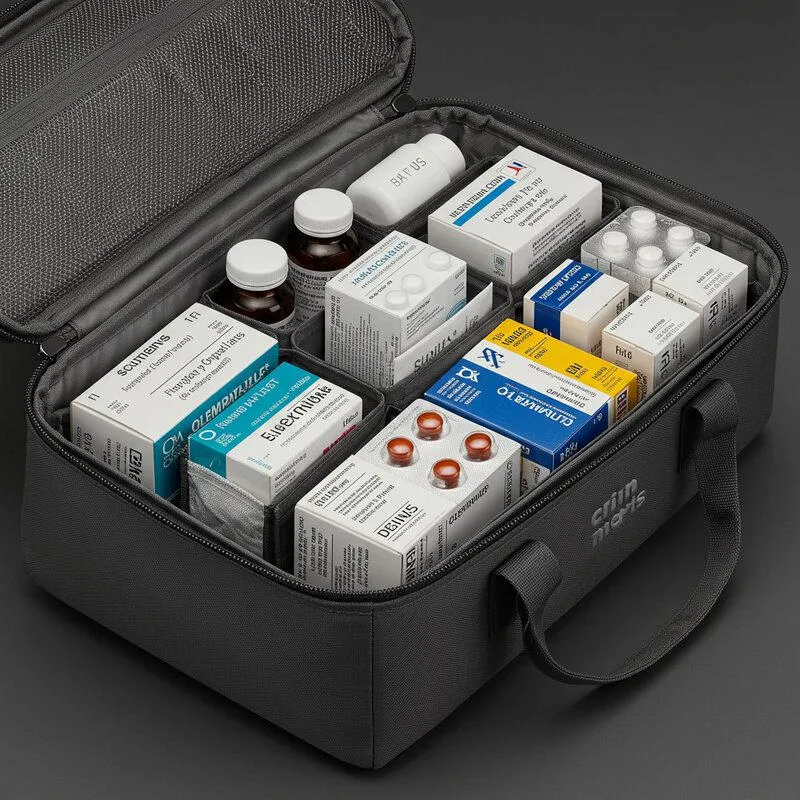
- Keep meds in original labeled containers when traveling — it matters for TSA and for any pharmacist who needs to verify what you're taking.
- Know the controlled-substance rules for anything in that category, and ask your doctor how they handle out-of-state patients.
- Identify a backup pharmacy near your winter home, just in case.
The Bottom Line
Splitting the year between two states used to mean splitting your medication routine into two chaotic halves. It doesn't anymore. With extended refills, flexible mail order, and pharmacies that never close, the snowbird's medicine cabinet can finally travel as smoothly as the snowbird.
Just do the planning in September. Future you, sipping coffee on the lanai in January with a full pill organizer, will be grateful.